
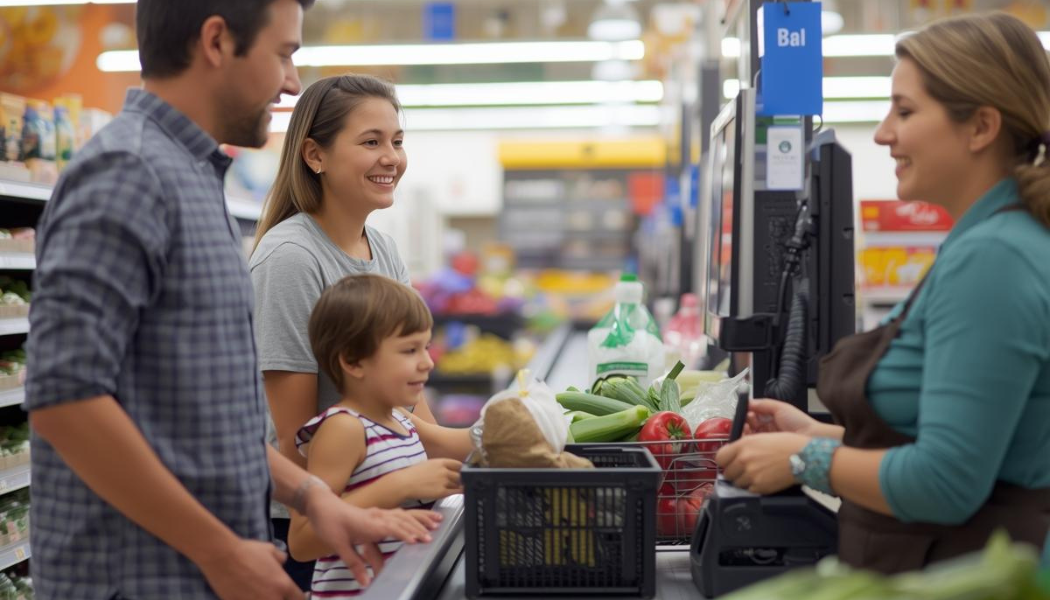
There was a time when we considered a family’s household income to be spending approximately 30% on housing, and 10-20% on food for an average family of four. Supply and demand pressures, the cost of importing and distributing food in North America has seen a steady rise for the most basic of groceries (think milk, eggs, cheese, beef).
Historical Food Prices
In 2023, at the mid-point of the pandemic, researchers cited that an average family of four (man, woman, boy, girl) would spend up to $16,288.41 per year on food, an increase of up to $1,065.60 from what was observed in 2022. (taken from Canada’s Food Price Report, 2023). Fast forward to 2025, where that year’s Canada’s Food Price Report shows the same family demographic was expected to spend $16,833.67 annually on food (or $1,402.81 monthly).
In 2025, Canada saw a total increase of 3.4% in food prices, most notably a 1.9% increase in the price of dairy and eggs, a 7.2% increase in the price of meat, and only a 3.3% increase in the prices when dining in restaurants. Since meat is the highest actual inflation rate of any food category in Canada, well above forecasts of 4-6%, let’s examine some of the factors contributing to that increase.
The authors of Canada’s Food Price Report 2026 state, “As of January 2025, cattle herds reached their lowest numbers since 1988; beef cow inventories were down across the country, and there were not enough breeding heifers to sustain herd sizes. Challenges persisted for producers throughout the year as Western Canada experienced a drought over the summer and input costs, such as feed, rose sharply. In June, production costs for livestock and animal products were up by 11.3% year-over-year; in August, the sector’s processing and packaging costs were up by 10.7%. As expected, these extra costs were passed down to consumers at the grocery store. Some producers are choosing to downsize their farms to improve returns or leaving the beef sector altogether. Industry trends show that this sector squeeze is expected to continue until at least 2027.”
As retail beef prices remain elevated, some consumers are changing their protein choice to chicken or pork, leading to increases in demand for those products as well. (I mean, have you seen the price of chicken breasts sometimes?)
What to expect in 2026
As you look ahead to updating your household’s cashflow management plan (aka budget) for the 2026 calendar year, here are some projections for your grocery list:
- BAKERY ITEMS: anticipated increase 2-4%
- DAIRY & EGGS: anticipated increase 2-4%
- FRUIT: anticipated increase 1-3%
- MEAT: anticipated increase 5-7%
- OTHER FOOD CATEGORIES: anticipated increase 4-6%
- RESTAURANTS: anticipated increase 4-6%
- SEAFOOD: anticipated increase 1-2%
- VEGETABLES: anticipated increase 3-5%
- TOTAL INCREASE IN FOOD PRICES: anticipated increase 4-6%
By the $numbers:
For a 2-person household, in 2026, the predicted annual food cost is $8,319.24 ($693.27 monthly)
For a 4-person household, in 2026, the predicted annual food cost is $17,571.79 ($1,464.32 monthly)
For a 6-person household, in 2026, the predicted annual food cost is $22,982.64 (1,915.22 monthly)
How to Prepare for a Higher Grocery Bill and Manage Your Budget
1. PAY ATTENTION: This is the number one way to tackle rising grocery costs. Many of us go to the grocery store, put things in our cart, perhaps that are or aren’t on our grocery list, and check out, handing over our debit or credit card for payment without really paying close attention to the final total. This may be due to distraction if you have your kids with you at the check-out, or you’re busy bagging your groceries yourself and are unable to watch the check-out screen closely. Paying closer attention to food prices both when you’re in the store, and when you get home and add your spend to your expense log, will allow you to adjust your spending priorities in real-time. Is that vegetable ridiculously expensive? Perhaps find an alternative in the store instead. Is it only week 1 of the month and you’ve already spent 35% of your month’s grocery budget? Examine your receipt to see if there are items that cost more than you thought.
2. BE MINDFUL OF ‘SHRINKFLATION’: food manufacturers who are aiming to keep their retail price the same as it has been may reduce the volume, but not the packaging size. This is something you may not find out until you get home and open the box, but be mindful about how far that decreased volume will go (especially for kids snacks and similar items). You may end up having to buy double to satisfy the need, which isn’t saving you any money. If you’ve become a victim of shrinkflation, consider alternative food items or try making some at home (e.g., cookies or granola).
3. DO YOUR HOMEWORK: Before even setting foot in the grocery store, take the time to plan. Create a meal plan for the week, checking your freezer and pantry first, and outline the necessary ingredients for those meals (try to plan for leftovers, or multiple recipes using similar ingredients to avoid waste and lower food costs). Once you know your inventory, check the flyers to use sale items to finish your meal plan. There’s no shame in looking for discounts and buying items only when they’re on sale. Every dollar counts, but be mindful that a sale price at one grocery store (i.e. Sobey’s) may still be higher than the regular price at a discount grocery store (i.e. No Frills) so plan your shopping accordingly. Using grocery apps to find the sales can also be helpful (I recommend Flipp), saving time and allowing you to take the flyers with you for convenience. Once you’re ready to shop, be sure to stick to the list. How many times have we popped into a store for 10 items and ended up walking out with 20? We can allow impulse (or hunger) to make our buying decisions, which can often lead to unneeded food that may be wasted.
4. CONSIDER WHERE YOU SHOP: you may have a neighbourhood grocery store that’s convenient, or prefer one store over another. There are advantages to choosing, and you don’t have to shop at only one place. When you are selecting where to spend your money however, consider things like the store brand items — are you a fan of that store’s generic or store-brand items that could help you save a little money? (Remember, many of the same name-brand manufacturers will also create the generic versions for stores) Also, look at the “perks” of shopping at one store over another. Are there points that can save you money on future groceries? If so, it may be worthwhile to do the bulk of your shopping at those locations.
No matter how high food prices are, these tips are tried, true and worth the extra time it may take to plan and be thoughtful about your grocery shopping.
Want to discuss cashflow management and budget creation?




0 Comments